


⏱
10ms Transfer
Typical transition between bypass and inverter mode.



Monitor household and grid power flow for more precise control of how solar, battery, and grid energy are used.
Packed in our Poland warehouse within 2 business days, with free shipping and no additional VAT. Estimated delivery takes 9–13 business days.
Enjoy a 5-year warranty with dedicated technical support. If a covered product issue occurs, our team will help provide the right solution.
Changed your mind? Request a return within 30 days of delivery. Contact us first, and our team will guide you through the return process.
Get the highlights
The 12kW inverter + 15kWh battery bundle is designed for households that need strong power output, reliable energy storage, and smarter energy management in one system. With high-capacity storage and powerful performance, it helps support essential home loads more efficiently and gives you greater confidence for daily use and backup power.

Enjoy powerful energy that fits the way you live every day — from charging your EV and running kitchen appliances to supporting outdoor living and high-demand household use, all from one integrated system.

When storms, outages, or unexpected blackouts happen, the system automatically supports your essential loads and gives your home more reliable backup power when you need it most.

Built for greater energy independence, the 12kW + 15kWh system delivers reliable power for everyday home use in off-grid setups. With solar generation and battery storage working together, it helps keep essential appliances and household systems running with more stability and control.

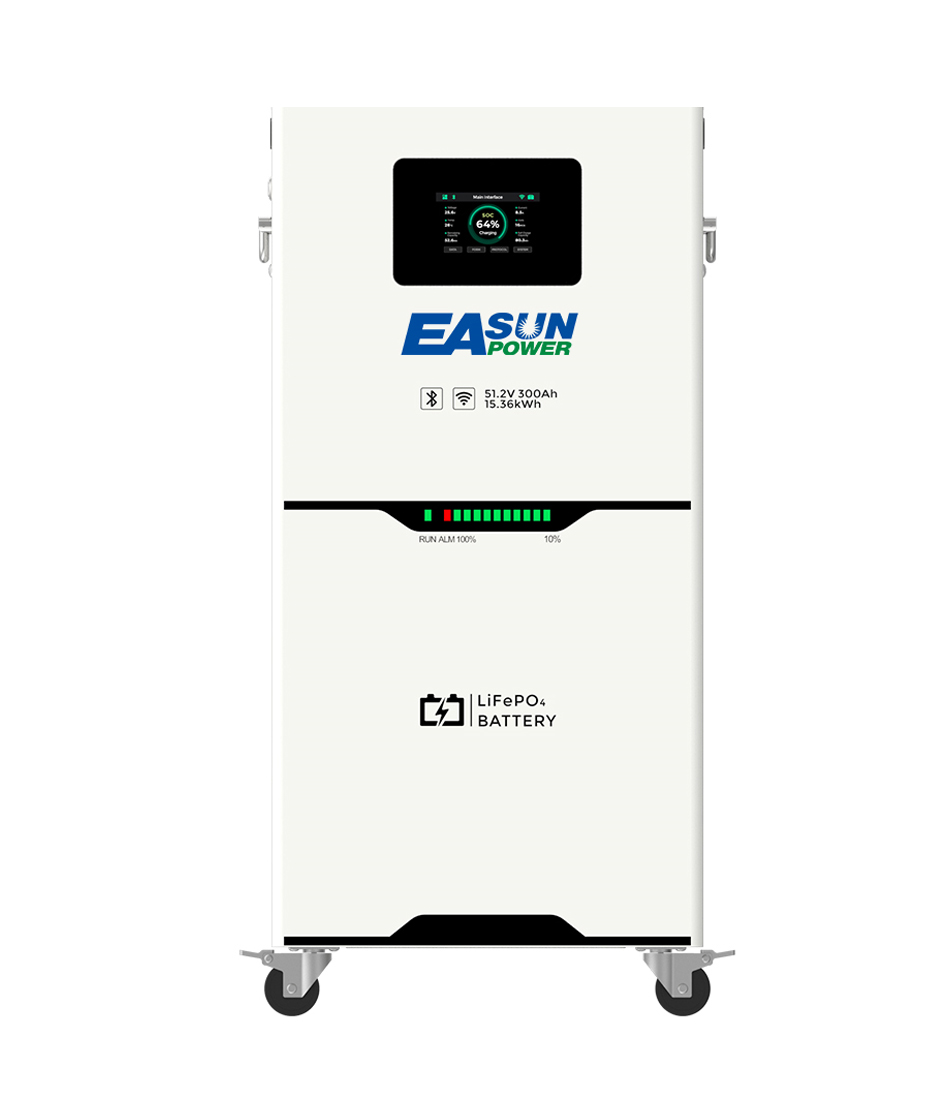
Featuring advanced LFP battery technology and a smart BMS, the 15kWh battery is engineered to deliver dependable performance over the long term. By monitoring and managing key battery data in real time, the system helps enhance safety, maintain stable operation, and support lasting energy reliability for the home.


View key battery data at a glance, including SOC, voltage, current, capacity, and cycle information for easier daily monitoring.
Track individual cell voltage and temperature data in real time to better understand battery performance and system health.
Adjust key battery parameters and protection settings more conveniently through the system interface for more flexible energy management.
Access software version, hardware details, BMS information, and communication protocol settings for smoother system integration and maintenance.
Use PC software to set charging schedules based on time-of-use electricity pricing. Charge the battery when grid rates are lower and reserve stored energy for peak-rate periods, helping you manage energy more efficiently and lower your power bill.

Built for a more seamless backup experience, the 12kW + 15kWh system helps protect your essential home appliances when outages happen. With reliable power support and smooth energy switching, it keeps daily life more comfortable and uninterrupted.

With multiple charging methods available, the 12kW + 15kWh system gives you more ways to stay prepared. Charge from solar during the day, top up from the grid when needed, or pair with a generator for added reliability. Built for energy flexibility, it helps ensure your battery is ready whenever your home needs power.

| Specification | Details |
|---|---|
| Model | IGrid-SGR-12KP-Wifi |
| Parallel Mode | Permitted |
| Parallel Number | 1–6 Units |
| Overload / Short-Circuit Protection | Circuit Breaker |
| Maximum Charging Efficiency | >93% |
| Conversion Time | 10ms (Typical) |
| Maximum Bypass Overload Current | 60A |
| Rated Output Power (W) | 12000W |
| Overload Protection | 102%<Load<125%: output off after 5 min / 125%<Load<150%: output off after 10 s / Load>150%: output off after 5 s |
| Bypass Circuit Breaker Specification | 63A |
| Power-Saving Mode Self-Consumption | Load ≤ 50W |
| Maximum Charge Current | 150A (Adjustable) |
| AC Charging Circuit Breaker Specification | 63A |
| Maximum PV Open Circuit Voltage | 500Vdc |
| Start-up Voltage | 120Vdc |
| MPPT Voltage Range | 90–450Vdc |
| Maximum PV Input Power | 9000W + 9000W |
| Maximum PV Input Current | 27A + 27A |
| EMC Certification Level | EN61000, C2 |
| Noise | ≤60dB |
| Communication Interface | USB / RS485 / WiFi / GPRS / Dry Node Control |
| Size (L × W × D) | 540 × 350 × 120 mm |
| Weight | 19.5 kg |
| Specification | Details |
|---|---|
| Battery Type | LiFePO4 Battery Energy Storage System |
| Rated Voltage | 51.2V |
| Capacity | 300Ah |
| Energy Storage | 15360Wh |
| Voltage Range | 43.2V–58.4V |
| Max Charge Current | 200A |
| Max Discharge Current | 200A |
| Discharging Cut-off Voltage | 43.2V |
| Floating Voltage | 57.6V |
| Cycle Life | 6000 Cycles @ 80% DOD |
| Working Temperature | -20°C to 55°C |
Manual for SGR 12KW Inverter
Download PDFManual for SME-51.2V-300Ah Battery
Download PDF


Visual concept only; actual product imagery must match the selected kit.
A complete 48V solar storage solution combining high AC output, LiFePO₄ capacity and smarter charging controls — designed for self-use, backup planning and off-grid applications.
The exact SKU, current discounts and checkout price must be connected to SHOPLINE before publication.
1 × SGR inverter + 1 × 15.36kWh LiFePO₄ battery
This button does not place orders. Separate inverter/battery links will appear below the live kit selector.
Six essential capabilities at a glance. Scroll down to see how each function works in everyday solar storage and backup use.
Typical transition between bypass and inverter mode.
Design separate solar strings for different roof conditions.
Battery protection and monitored charge/discharge limits.
Check supported inverter operating data remotely.
Measure power exchange with your home and grid.
Plan charging windows around electricity tariffs.
Instead of mixing inverter-only and battery-only options into one product selector, this page presents the complete kit as one clear purchase.
12kW rated AC output with dual MPPT PV input and advanced energy scheduling.

51.2V, 300Ah battery with a monitored BMS and communication interfaces.
Your original battery feature collage becomes an interactive-looking bento section: the visuals convey the story, while every important claim remains selectable HTML text.

51.2V · 300Ah nominal. Multi-battery expansion requires approved matching equipment and installation.

Grade A claim to be supported by supplier records.

Max battery BMS discharge rating*

Advertised cycles under stated test conditions*

Charging and discharging limits differ; consult the battery manual.
Two PV trackers give installers more design flexibility when solar modules face different orientations or experience different irradiation conditions. It is a meaningful system feature — not just another specification.
Subject to each tracker’s voltage and current limits; maximum DC input is not the same as maximum AC output.
String sizing must meet cold-weather voltage and current requirements.
Roof orientation A
Roof orientation B
Technical concept diagram. Not an installation wiring plan.
Bypass ↔ inverter mode · according to the listed inverter specification
A typical 10ms bypass-to-inverter transfer helps support essential equipment during eligible outages when the system is correctly configured and installed.
Appropriate load selection and backup wiring remain essential.
Very sensitive devices may require a dedicated UPS; behaviour depends on load and installation.
CT-based power monitoring, ToU schedules and charging priorities deserve more than one sentence. This block explains how a configurable system can behave.
CT measures exchange at the designated point when compatible hardware and settings are installed.
Monitor grid import and export information to support more informed energy management and self-consumption strategies.
Tap a scenario to see an illustrative operating logic. These are customer examples, not a claim that every label maps to an exact firmware menu.
ToU scheduling on the published SGR listing is described through PC software. Verify firmware-specific settings before publication.
Use one prominent phone visual, then explain in actual HTML text what data the inverter monitoring and the battery BMS may provide. Keep these two interfaces distinct.
Let customers explore a realistic energy calculation. Show the assumptions alongside the result rather than promising a fixed number of backup hours.
Nominal storage 15.36kWh · assumed usable proportion 90% · illustrative AC efficiency 90%.
This simplified estimate excludes standby draw, changing loads, temperature effects and operating limits. Power delivery must also respect the battery's BMS current rating.
For a constant 1.50kW load under the assumptions shown.
Keep vital specifications indexable and translatable. Detail the inverter and battery limitations as separate components within the same matched kit.
| Specification | SGR 12kW + 15.36kWh system |
|---|---|
| Inverter | IGrid-SGR-12KP-Wifi · 12,000W rated AC output |
| Battery | 51.2V · 300Ah · 15.36kWh nominal LiFePO₄ |
| Solar MPPT | Dual trackers · up to 9,000W + 9,000W PV input (subject to constraints) |
| PV MPPT voltage | 90–450V DC |
| Transfer time | 10ms typical · bypass to inverter |
| Battery maximum discharge current | 200A as listed for this battery configuration · verify exact SME SKU |
| Energy management | ToU scheduling via supported PC software; optional CT functionality |
| Battery communication | RS485/CAN capabilities depend on specific battery and protocol setup |
| Important limitation | 12kW inverter rating does not guarantee 12kW sustained output from one battery alone |
Questions and answers remain plain HTML in the initial document for accessibility, browser translation and reliable content extraction.
Not necessarily. The inverter's rated AC output and the battery's BMS discharge capability are separate limits. The battery listing gives a 200A maximum discharge current; sustained AC output depends on operating voltage, losses, battery settings and conditions. Confirm your planned loads with EASUN technical support.
CT-based monitoring is supported in certain configurations, but the kit's exact accessory list must be verified. Do not assume the sensor is included solely because the inverter supports CT functions.
The inverter is advertised with WiFi and monitoring functions. Available metrics, remote controls and connectivity depend on the supplied module, compatible software and firmware. The battery BMS may use a separate interface for cell-level details.
Supported charging/source priorities and ToU schedules are configured using the inverter's available controls and supported software. Their exact menu names and behaviour must be checked against the manual and installed firmware.
No. The specification states a typical 10ms transfer between bypass and inverter. Some sensitive equipment may require a dedicated UPS, and the backup installation must be designed and commissioned correctly.
Battery expansion may be possible with approved compatible units. Check BMS compatibility, parallel limits, protection and cabling requirements before adding batteries.
Review the official product listing for up-to-date price, accessories and purchasing information.
SEO / GEO / TRANSLATION: all primary product claims, descriptions, specifications and FAQ answers are visible HTML text (not embedded inside pictures). The initial document contains one H1 and ordered H2/H3 headings. Real store publication should add validated product schema through the SHOPLINE product system, canonical URL and localized metadata.